Tools
Blackjack table
Do you want to play blackjack and make the best possible choices during your gaming sessions?
Tools
Blackjack Table
Do you want to play blackjack and make the best possible choices during your gaming sessions?
It is entirely possible thanks to the basic strategy applicable with the blackjack chart. It compiles all the possible situations in which you may find yourself.
With this strategy, you will be able to choose the most appropriate action to take based on the dealer's hand. Hit, stay, split or even double down, all these actions will hold no more secrets for you.




Before starting to learn the basic strategy of blackjack, it is necessary to revisit the meaning of certain terms.
Hit: Draw a card
Stay: No more drawing extra cards
Split: Separate two cards of the same value, which results in having two hands instead of one, and therefore, doubling the initial bet.
Double Down: Double your initial bet after receiving the first two cards. If you choose this option, the dealer will only give you one card.
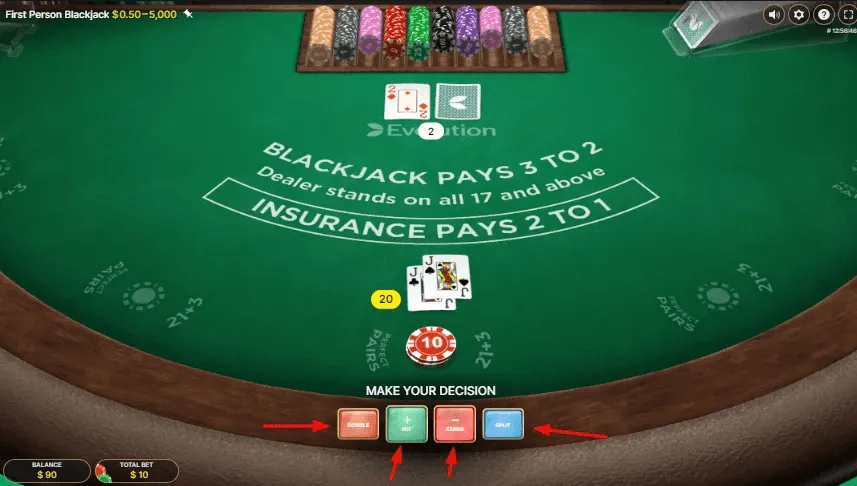
Soft: It is a hand that contains an Ace (excluding blackjack). The value of these hands is at the player's discretion. If the player gets an Ace and a 7, they can choose between two hand values; either 8 or 18. Depending on the value the player assigns to their hand, the player will make a decision.
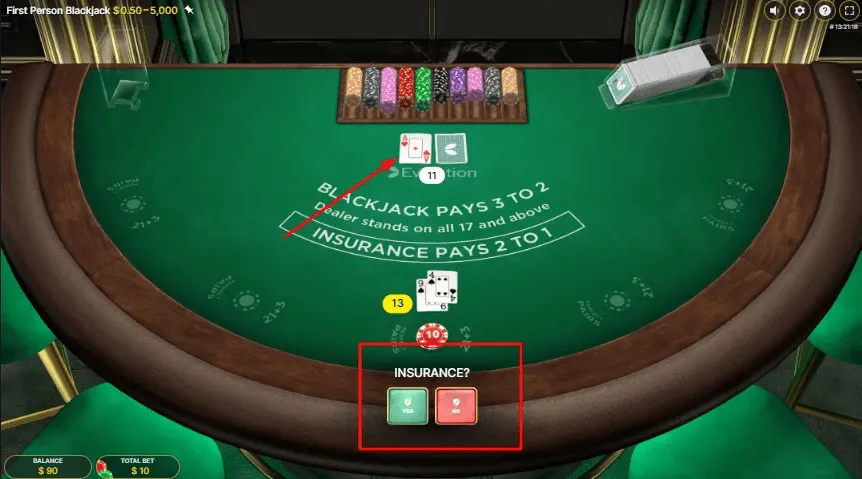
Insurance: The insurance can be taken by the player when the dealer has an Ace as their face-up card. To insure their hand, the player must pay 0.5 times the amount of their bet. If the dealer has a blackjack, your bet is refunded. If the dealer does not have a blackjack, the insurance is not refunded.
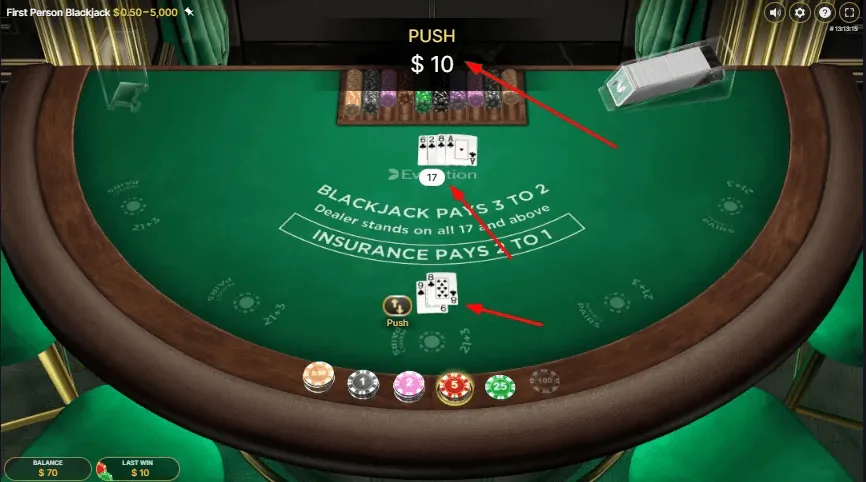
Push: A push is when the dealer has the same hand value as the player. Therefore, there is no winner and the player receives their central bet back, but not the side bets.
Bust: A bust occurs when the value of the cards exceeds 21. When a player or the dealer busts, they automatically lose.
To facilitate learning the blackjack table, we recommend that you remember these principles of basic strategy.
Never split cards with a value of 10
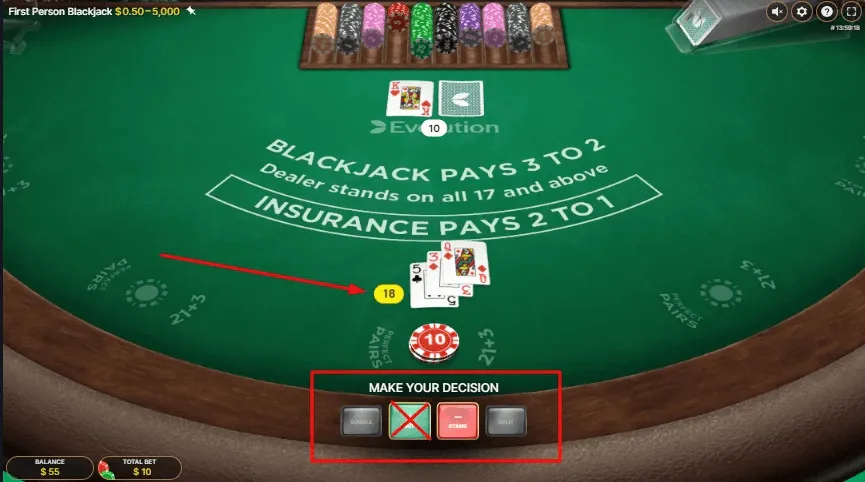
Never hit if you have a hand between 17 and 21, regardless of the dealer's cards.
A pair of 8s and a pair of Aces are the only hands that can be split in any situation.
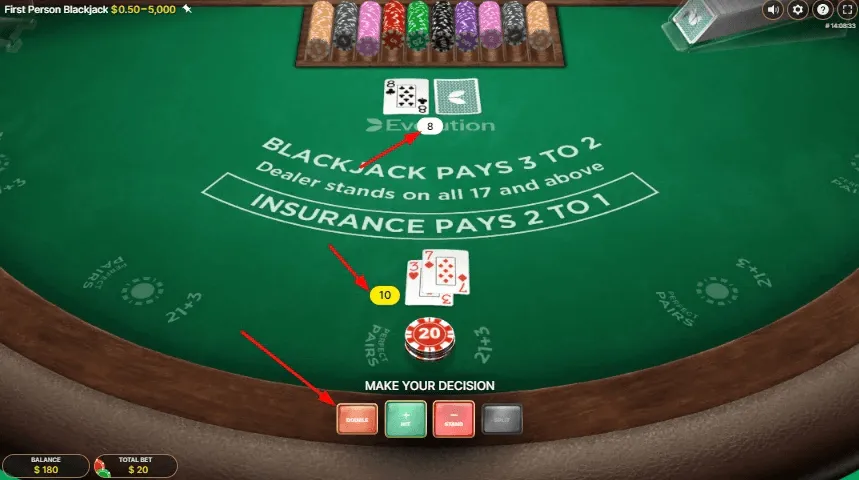
The hands that the player should double are between 9 and 11, depending on the dealer's card.
Do not draw cards if your hand is between 13 and 16 and the dealer's is between 2 and 6. Unless you have an Ace in your hand.
When the dealer has 2 or 3, the only hand (over 10) that is drawn is 12.
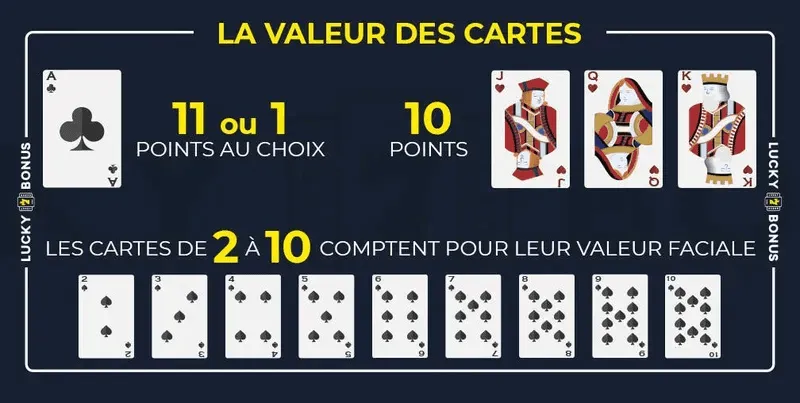
To fully understand the rules of blackjack and to make the best use of the table, you must first know the value of the cards. Each card has a specific value that never changes, except for the Ace. It can be worth 1 or 11. It is the player who chooses its value, except when you have 12 in hand; any subsequent Ace drawn automatically becomes a 1.
Blackjack is a game based on mathematics. Here are some probabilities in blackjack that might interest you:
The blackjack table allows you to reduce the casino's long-term edge on winnings to less than 1%. If the RTP of blackjack is 98% without the table, it will rise to 99% if you follow it.
A player who plays without the basic strategy gives a 4% advantage to the casino.
Following the same strategy as the dealer (hit until 16 and stand on 17 or more) gives a 5.48% advantage to the casino.
In a pack of cards, there are 52 cards: 16 cards (called 'pips') have a value of 10 (10, Jack, Queen, King). Just under a third (32.5%) of the pack consists of pips.
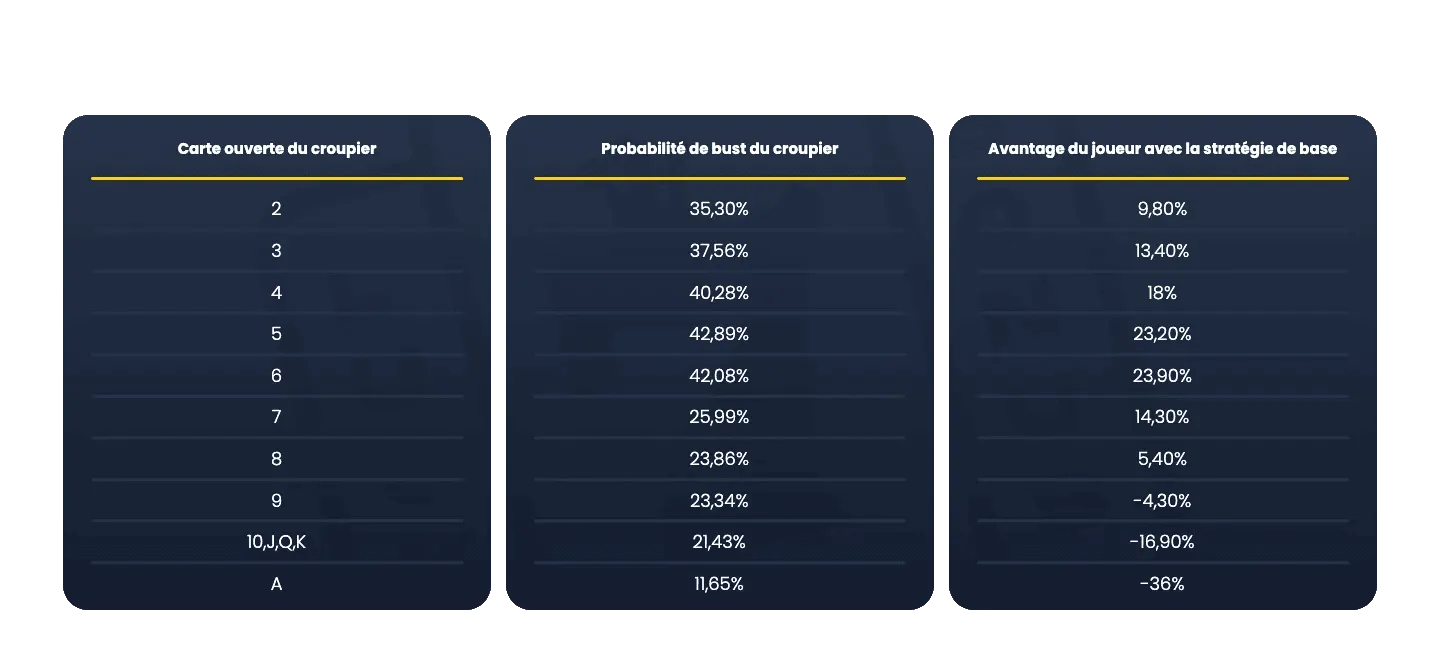
Finally, here is a table explaining the player's advantage compared to the dealer's visible card. The first column indicates the dealer's probability of busting and the second shows the player's advantage using the blackjack table.
Blackjack is a highly strategic game in which there are many things to consider.
We have created a comprehensive article for you in which you will find all the blackjack techniques that we use during our sessions.
8
minute